

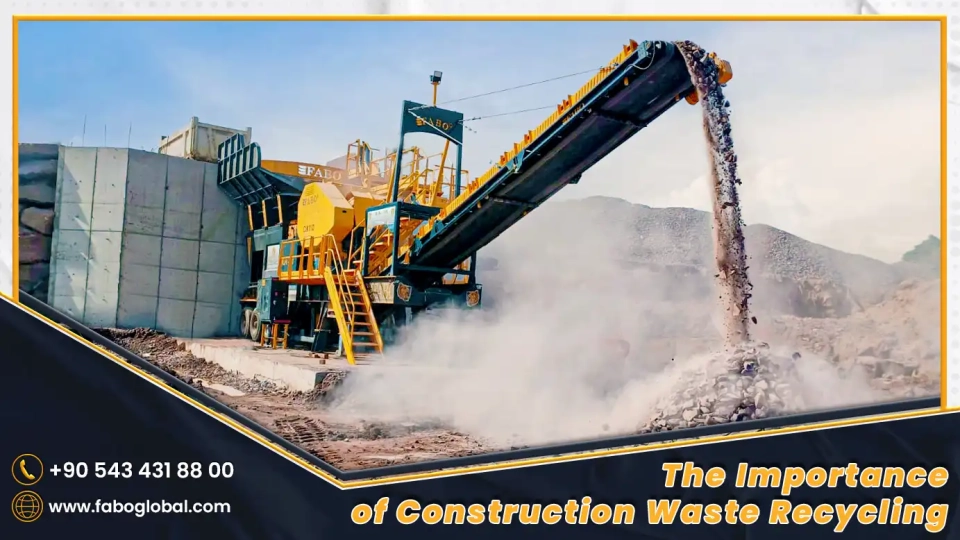
Construction Waste Recycling has become a key priority in today’s construction and demolition sector. As building projects continue to increase in scale and complexity, job sites are generating significantly more debris than in the past. Without proper management, this waste contributes to landfill growth, environmental strain, and avoidable project expenses.
Effective recycling practices offer far more than environmental protection—they enhance operational efficiency, help companies comply with industry regulations, and support long-term sustainability goals. Repurposing materials such as concrete, asphalt, metal, and brick into reusable aggregates reduces reliance on new resources and lowers overall construction costs. Utilizing advanced equipment like the Portable Jaw Crusher allows construction companies to efficiently process and recycle concrete, brick, and other demolition debris on-site.
Types of Construction Waste Found on Job Sites
During the demolition of reinforced concrete structures, large volumes of construction debris are generated. Fabo Global’s crushing and screening plants are designed to process this debris efficiently, breaking it down into reusable backfill material and concrete aggregates while also separating embedded metals for recycling.
How Construction Waste Is Recycled: Step-by-Step Process
Step 1: Pre-Screening of Debris with a Scalper Screen
Construction and demolition materials often contain soil, mud, and sand mixed with larger stones and debris. Separating these fine materials is crucial for producing high-quality aggregates and backfill material.
A scalper screen is used as the primary screening equipment, ensuring that oversized stones are efficiently separated from soil, clay, and sand.

Step 2: Crushing Process with a Mobile Jaw Crusher
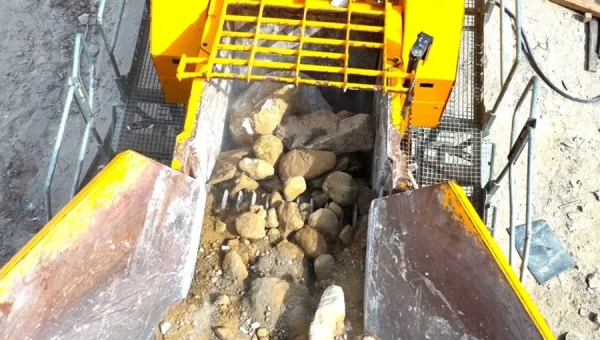
A mobile jaw crusher provides the most effective solution for breaking down debris that has been pre-screened by the scalper. With its strong jaw structure, it can crush even the toughest materials quickly and reliably.
Step 3: Metal Separation with a Separator Belt
After the jaw crusher, a separator belt is used to extract metal components—such as rebar—from the crushed material. This ensures that valuable metal is recovered and prevents steel pieces from entering secondary crushers, protecting the equipment from potential structural damage.
Step 4: Utilizing the Final Product
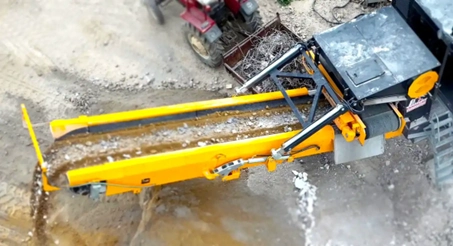
Once processed through the jaw crusher, the crushed debris can be used directly as backfill material or fed into secondary crushing and screening equipment—such as a secondary impact crusher—to produce high-quality concrete aggregates.
Turning Waste Materials Into Reusable Aggregates with Modern Equipment
Using modern mobile crushing and screening plants, materials processed by the jaw crusher can be further reduced in size through secondary crushers and separated precisely with a vibrating screen. This integrated system allows the production of high-quality concrete aggregates suitable for use in new construction projects.
Common Methods Used in Recycling of Construction Waste
Different materials require different recycling methods. Here are the most widely used techniques:
- Mechanical Crushing
The most common approach—mobile or stationary crushers break down waste into reusable aggregates. Mobile crushers are especially popular in the USA and UK because of their flexibility.
- Screening
Screens classify crushed materials based on size to ensure consistency and usability.
- Metal Separation
Magnetic or eddy current separators remove ferrous and non-ferrous metals from mixed waste.
- Wet or Dry Separation
Used particularly when construction debris contains soil, dust, or fine materials.
- On-Site Recycling
Contractors use mobile crushers and screens on the job site to eliminate unnecessary transportation costs.
These methods help companies get the highest quality recycled material possible.
Key Advantages of Construction Waste Recycling
Recycling construction waste brings several major benefits to contractors, developers, and communities:
✔ Lower Material and Disposal Costs
Recycled materials reduce the need for expensive virgin aggregates and minimize landfill fees.
✔ Reduced Environmental Impact
Less mining, fewer emissions, and a much smaller carbon footprint.
✔ Higher Resource Efficiency
Materials like concrete and metal can be reused repeatedly without losing quality.
✔ Stronger Company Reputation
Operating sustainably strengthens your brand—especially when bidding on government or large-scale commercial projects.
Recycling construction waste supports a cleaner industry and a more efficient circular economy.
Fabo Global’s Crushing and Screening Technologies for Waste Recycling
Fabo Global offers cutting-edge technologies designed specifically for Construction Waste Recycling. These machines are engineered to handle the tough and abrasive materials found on demolition and construction sites.
High-Performance Crushers
Our mobile and stationary crushers easily process concrete, asphalt, and masonry. They deliver high efficiency, excellent durability, and strong production capacity.
Precision Screening Solutions
Our screening plants expertly classify materials into the right sizes, producing clean, reliable aggregates for reuse in construction.
Advanced Metal Separation
Built-in magnetic separators remove metals like rebar, ensuring clean output and protecting equipment.
Mobile Solutions for On-Site Recycling
Portable units are incredibly popular in the USA and UK because they can be transported quickly and set up in tight or challenging areas.
Fabo Global equipment helps contractors reduce costs, speed up operations, and produce high-quality recycled materials.