

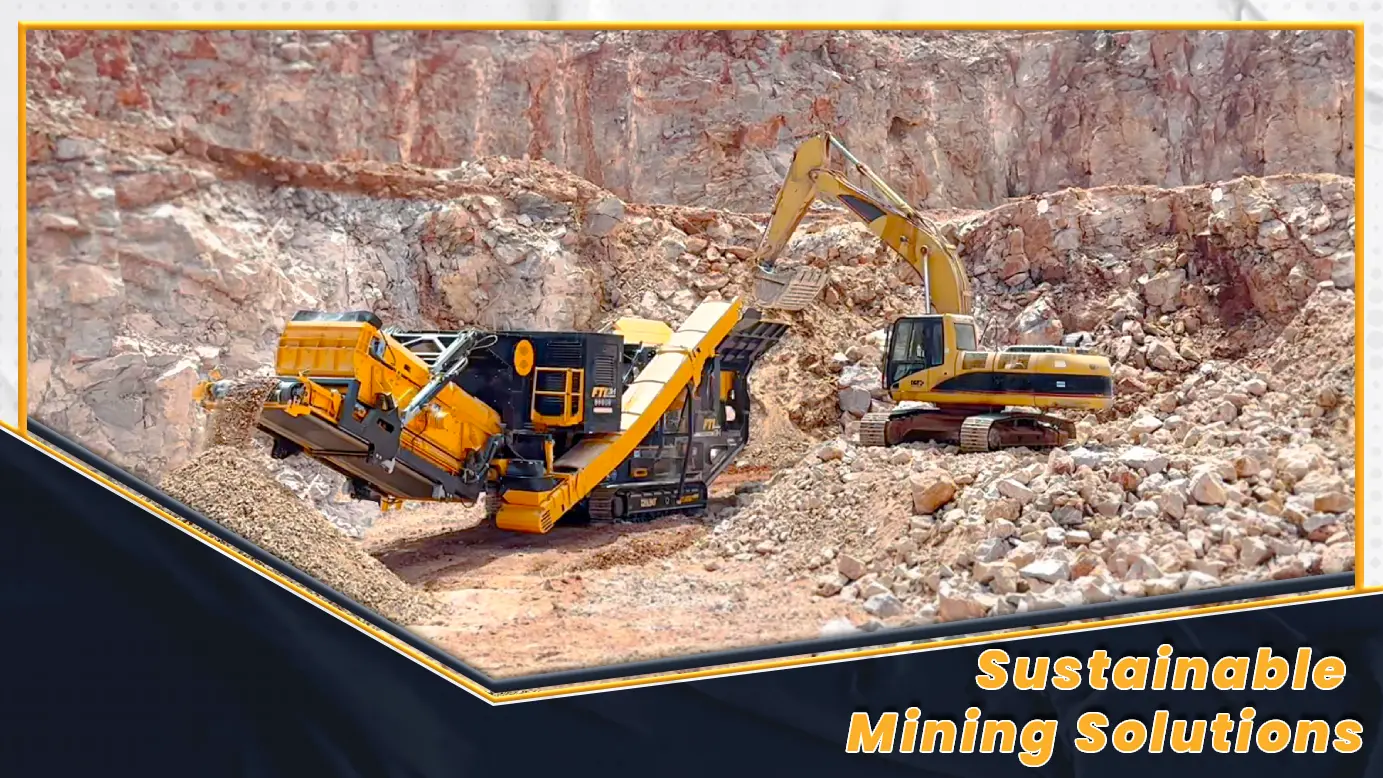
Mining has always been one of the world’s most essential industries, providing the raw materials required for infrastructure, construction, transportation, and manufacturing. However, increasing environmental regulations, rising energy costs, and growing expectations for responsible resource management have transformed how modern mining operations are planned and executed. Today, Sustainable Mining is no longer simply an environmental initiative—it has become a strategic business approach that improves operational performance while reducing long-term costs.
For quarry operators, aggregate producers, mining companies, and infrastructure contractors, sustainable mining means finding the right balance between productivity, profitability, and environmental responsibility. Modern crushing and screening technologies, energy-efficient equipment, recycling systems, and intelligent plant automation all contribute to achieving these objectives.
What Is Sustainable Mining?
Sustainable Mining is the practice of extracting, processing, and managing mineral resources in a way that minimizes environmental impact while maximizing economic value and social responsibility.
Rather than focusing solely on production output, sustainable mining considers the complete lifecycle of mining operations—from exploration and extraction to aggregate production, waste management, rehabilitation, and equipment efficiency.
Key objectives of sustainable mining include:
- Reducing energy consumption
- Lowering greenhouse gas emissions
- Conserving water resources
- Maximizing raw material recovery
- Reducing production waste
- Improving equipment efficiency
- Enhancing workplace safety
- Extending mine life through efficient resource utilization
These objectives directly influence profitability because operational efficiency and sustainability often go hand in hand.
How does sustainable mining work?
Modern sustainable mining combines multiple technologies and operational strategies, including:
- Energy-efficient crushing and screening plants
- High-performance mobile crushing plant solutions
- Optimized stationary crusher installations
- Smart process automation
- Dust suppression systems
- Water recycling technologies
- Predictive equipment maintenance
- Advanced aggregate production management
Instead of treating sustainability as a separate initiative, leading mining companies integrate these solutions throughout the entire production process.
Why Is Sustainable Mining Becoming a Global Priority for Modern Mining Operations?
The growing adoption of Sustainable Mining is being driven by a combination of environmental, economic, and operational factors. Around the world, mining companies are under increasing pressure to reduce their environmental footprint while maintaining high productivity and profitability. Governments are introducing stricter regulations on carbon emissions, dust control, water management, noise reduction, land rehabilitation, and waste disposal, making sustainable practices an essential part of modern mining operations. At the same time, rapid urbanization and infrastructure development continue to increase the demand for aggregates, concrete, industrial minerals, and road construction materials, requiring producers to maximize resource recovery through more efficient aggregate production systems.
Beyond regulatory compliance, sustainable mining has become a powerful driver of business performance. Rising energy costs, growing ESG (Environmental, Social, and Governance) expectations from investors, and the need to improve operational efficiency have encouraged companies to invest in energy-efficient crushing and screening plants, intelligent automation, and advanced process optimization. These technologies help reduce electricity consumption, minimize equipment wear, lower maintenance requirements, decrease downtime, and improve production consistency. As a result, sustainable mining not only supports environmental responsibility but also enhances profitability, strengthens investor confidence, and provides mining companies with a long-term competitive advantage in global markets.
The Core Principles of Sustainable Mining
Successful Sustainable Mining strategies are built upon several interconnected engineering and operational principles.
Resource Efficiency
Every ton of extracted material represents both an opportunity and a cost.
Modern processing plants aim to recover the highest possible percentage of valuable material while minimizing waste generation.
Advanced crushing circuits, optimized screening stages, and precise material classification all contribute to higher recovery rates.
Energy Optimization
Energy consumption remains one of the largest operational expenses in mining.
Energy-efficient mining equipment incorporates:
- High-efficiency electric motors
- Intelligent load management
- Optimized crushing chambers
- Automated production control
- Variable speed drives
These technologies improve overall plant performance while lowering operating costs.
Water Conservation
Water scarcity has become a major challenge for mining operations worldwide.
Sustainable mining incorporates:
- Closed-loop water systems
- Water recycling
- Efficient washing plants
- Sedimentation technologies
- Reduced freshwater consumption
Effective water management improves environmental performance while reducing operating expenses.
Waste Reduction
Every percentage point of improved material recovery contributes to sustainability.
Modern crushing and screening plants minimize waste through:
- Better feed preparation
- Optimized crusher settings
- High-efficiency screening
- Accurate product sizing
- Process monitoring
Reducing waste not only protects natural resources but also increases profitability.
Automation and Digital Monitoring
Industry 4.0 technologies allow operators to continuously monitor plant performance.
Real-time data enables:
- Production optimization
- Energy monitoring
- Equipment diagnostics
- Remote maintenance
- Predictive analytics
- Improved operational decision-making
Digital transformation is becoming a central component of sustainable mining worldwide.
How Crushing and Screening Plants Support Sustainable Mining Operations
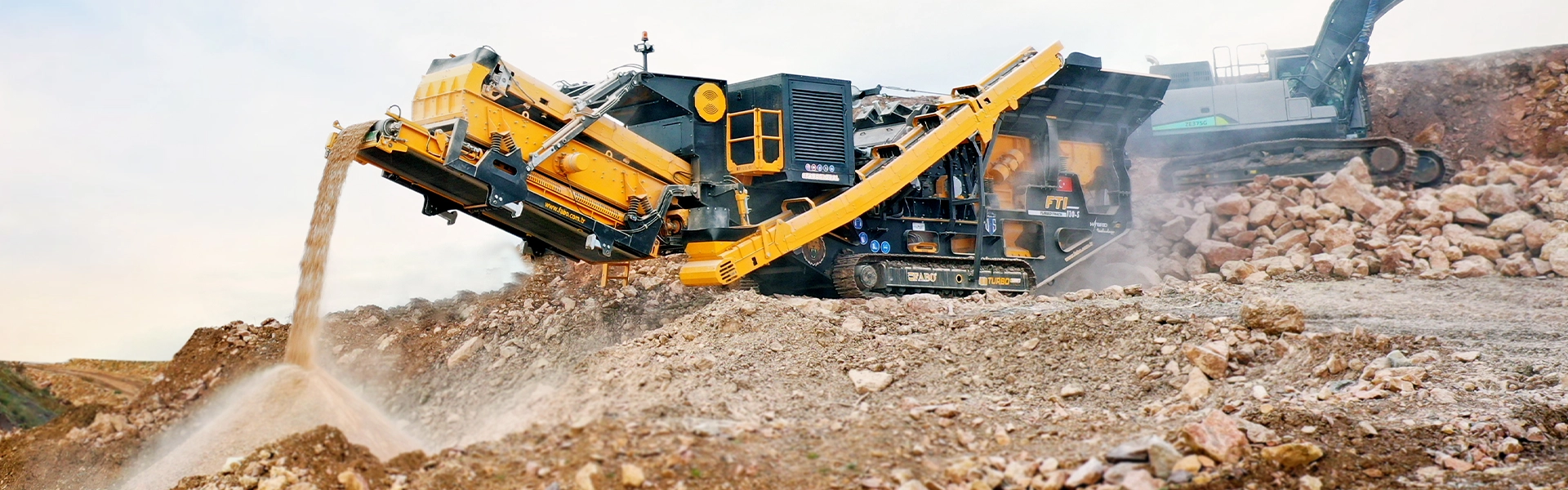
Modern Sustainable Mining depends on efficient crushing and screening plants to maximize productivity while reducing environmental impact. These systems convert extracted rock into high-quality aggregates, improving material recovery, lowering energy consumption, and minimizing waste. Advanced crusher designs, optimized material flow, intelligent feed control, and energy-efficient motors help reduce operating costs, decrease emissions, and make better use of natural resources, making crushing and screening plants a key part of sustainable mining operations.
Automation further enhances sustainability by continuously monitoring plant performance and automatically adjusting operating parameters such as feed rate, motor load, and crusher settings. This improves energy efficiency, reduces equipment wear, minimizes downtime, and ensures consistent product quality for concrete, asphalt, road construction, and other aggregate applications. Combined with predictive maintenance and remote monitoring, modern crushing and screening technologies deliver higher operational efficiency, lower lifecycle costs, and long-term sustainable performance.
Sustainable Mining Equipment Selection: Mobile vs. Stationary Crushing Plants Compared
Choosing the correct equipment is one of the most important decisions for any mining project. There is no universal solution; the ideal configuration depends on production capacity, project duration, site conditions, material characteristics, and future expansion plans.
The two most common options are mobile crushing plants and stationary crushing plants, each offering distinct advantages.
Mobile Crushing Plant
A mobile crushing plant integrates crushers, screens, feeders, and conveyors onto wheeled or tracked chassis, allowing the entire system to be relocated quickly.
Advantages
- Fast installation
- Lower civil engineering requirements
- Easy relocation between project sites
- Reduced material transportation
- Ideal for temporary operations
- Flexible production layouts
Because materials are processed closer to the extraction point, mobile plants reduce fuel consumption associated with hauling raw rock across long distances.
This makes them particularly suitable for:
- Infrastructure projects
- Highway construction
- Railway projects
- Urban demolition
- Recycling applications
- Contract crushing
Limitations
Mobile plants may not always be the most economical solution for extremely large-scale mining operations requiring continuous production over several decades.
Stationary Crusher Plants
A stationary crusher installation is designed as a permanent processing facility with higher production capacities and greater customization possibilities.
Advantages
- Maximum production capacity
- Long equipment lifespan
- Lower operating cost per ton
- Easier integration with washing plants
- Suitable for multiple crushing stages
- Excellent for continuous aggregate production
Stationary plants are commonly selected for:
- Large quarries
- Cement plants
- Industrial mining operations
- Long-term aggregate production facilities
Mobile vs. Stationary: Which Is Better?
| Mobile Crushing Plant | Stationary Crushing Plant |
|---|---|
| High mobility | Permanent installation |
| Fast commissioning | Higher long-term productivity |
| Lower infrastructure cost | Higher production capacity |
| Flexible site changes | Lower cost per ton |
| Ideal for temporary projects | Best for long-term mining operations |
How Recycling Plants Contribute to Sustainable Mining
Recycling plants play a vital role in Sustainable Mining by converting construction, demolition, and industrial waste into reusable aggregates, reducing the need for virgin raw materials and supporting a circular economy. Using crushers, screens, and separation technologies, these plants process materials such as concrete, asphalt, bricks, and natural stone into high-quality aggregates for road construction, concrete production, and infrastructure projects. This approach helps conserve natural resources, reduce landfill waste, lower transportation emissions, and decrease energy consumption, making recycling an essential strategy for more sustainable and efficient aggregate production.
Why FABO Global Is a Trusted Partner for Sustainable Mining Projects
Achieving Sustainable Mining goals requires more than advanced equipment—it requires a reliable technology partner with proven engineering expertise. FABO Global supports mining companies with high-performance crushing, screening, recycling, and concrete batching solutions designed to improve productivity, reduce operating costs, and enhance long-term sustainability. With energy-efficient technologies, durable equipment, flexible plant configurations, international project experience, and comprehensive after-sales support, FABO Global helps quarry and mining operators optimize aggregate production, increase equipment reliability, and maximize return on investment while meeting the demands of modern, sustainable mining operations.
Is Investing in Sustainable Mining Equipment Financially Worth It?
Investing in Sustainable Mining equipment is generally a smart long-term decision, as the benefits often outweigh the initial investment. Modern crushing and screening plants equipped with energy-efficient motors, optimized crushing chambers, and intelligent automation help reduce fuel and electricity consumption while lowering production costs per ton. At the same time, predictive maintenance and durable components increase equipment availability, minimize unexpected downtime, and reduce maintenance expenses by extending the lifespan of critical wear parts. Improved material flow and consistent product quality also enhance overall productivity, while better compliance with environmental regulations reduces operational risks and strengthens competitiveness. Together, these advantages deliver higher efficiency, lower operating costs, and a stronger return on investment over the equipment’s lifecycle.