

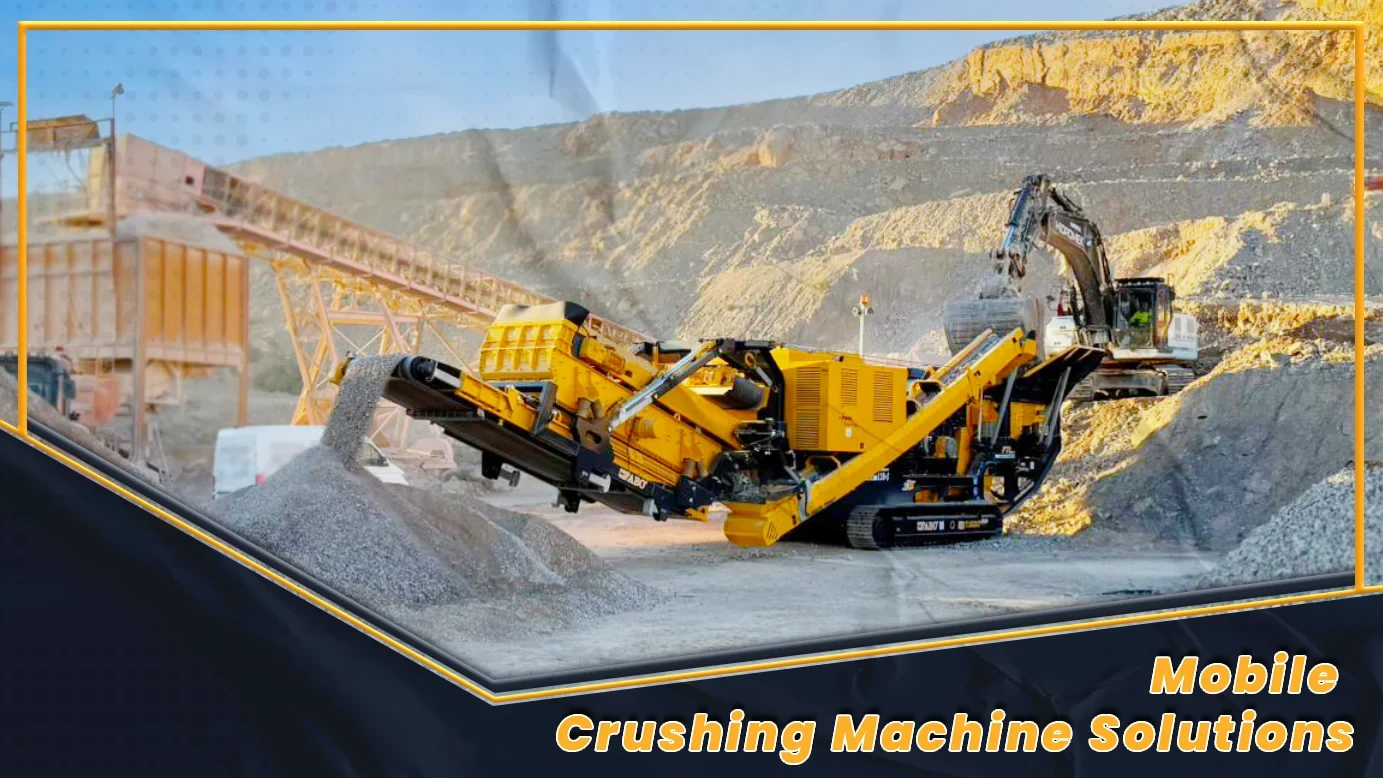
In today’s highly competitive construction, mining, and recycling sectors, operational efficiency is no longer optional—it is a necessity. Companies are under constant pressure to reduce transportation costs, improve material processing efficiency, and complete projects faster without compromising quality. This is where a mobile crushing machine becomes a game-changing solution.
Unlike traditional fixed installations, mobile crushing systems bring the crushing process directly to the material source. Whether processing hard rock in a quarry, recycling demolition waste, or supporting large-scale infrastructure projects, mobile crushing equipment provides flexibility, mobility, and cost efficiency that stationary systems often struggle to match.
As aggregate demand continues to grow worldwide, project managers, contractors, and mining operators are increasingly investing in mobile crushing technologies to optimize production and improve profitability. Understanding how these machines work and selecting the right solution can significantly impact long-term operational success.
What Is a Mobile Crushing Machine and How Does It Work?
A mobile crushing machine is a portable material processing unit designed to reduce large rocks, ores, concrete, asphalt, and other materials into smaller, usable sizes directly at the project site.
How Does a Mobile Crushing Machine Work?
The process typically follows these stages:
- Material is loaded into the feeder.
- The feeder transfers material to the crusher.
- Crushing occurs inside the machine.
- Conveyors transport processed material.
- Screening units separate materials by size.
- Final products are stockpiled or transferred for further processing.
What is a mobile crushing machine?
A mobile crushing machine is a portable crushing system that processes raw materials on-site, eliminating the need to transport materials to a fixed crushing facility.
This ability to move directly between project locations makes mobile crushing equipment an increasingly valuable asset for modern aggregate production and mining operations.
Key Components of a Modern Mobile Crushing Machine
Modern mobile crushing systems integrate several advanced components designed to maximize performance and reliability.
Feeding System
The feeder regulates material flow into the crusher and prevents overload conditions.
Crusher Unit
This is the heart of the machine and can consist of:
- Jaw crushers
- Cone crushers
- Impact crushers
- Vertical shaft impact (VSI) crushers
Each crusher type is optimized for specific material characteristics and production requirements.
Screening Unit
Integrated screening systems classify materials into various fractions, ensuring consistent product quality.
Conveyor Systems
Conveyors efficiently transport crushed materials throughout the production process.
Control and Automation Systems
Modern units utilize PLC-based automation systems that provide:
- Real-time monitoring
- Remote control capabilities
- Production tracking
- Maintenance alerts
Power System
Mobile crushing plants can operate using:
- Diesel engines
- Hybrid power systems
- Fully electric solutions
These options allow operators to adapt to project-specific requirements.
Main Types of Mobile Crushing Machines Used in Industry
Different applications require different crushing technologies.
Mobile Jaw Crushers
Mobile jaw crushers are primarily used for primary crushing applications.
Best for:
- Hard rock
- Granite
- Basalt
- Mining operations
Advantages:
- High crushing force
- Durable construction
- Excellent feed acceptance
Limitations:
- Produces less uniform final products
- Often requires secondary crushing
Mobile Cone Crushers
Cone crushers are ideal for secondary and tertiary crushing.
Best for:
- Aggregate production
- Mining applications
- High-quality end products
Advantages:
- Consistent particle shape
- High capacity
- Lower wear costs
Limitations:
- Higher initial investment
- Requires controlled feed size
Mobile Impact Crushers
Impact crushers are highly effective for recycling applications.
Best for:
- Concrete recycling
- Asphalt recycling
- Construction waste
Advantages:
- Excellent product shape
- High reduction ratio
- Versatile applications
Limitations:
- Higher wear rates with abrasive materials
Industries That Benefit Most from Mobile Crushing Machines
A wide range of industries rely on mobile crushing technology.
Construction Industry
Construction projects require large volumes of aggregates. Mobile systems allow contractors to produce material directly on-site.
Mining Operations
Mining companies utilize mobile crushing equipment to process extracted materials closer to the excavation area.
Quarry Operations
Quarries benefit from reduced hauling distances and increased operational flexibility.
Infrastructure Projects
Roads, bridges, railways, and airports frequently utilize mobile crushing plants to support large-scale aggregate production.
Demolition and Recycling
Mobile crushers transform demolition waste into reusable materials, reducing landfill dependency and material costs.
Advantages of Using a Mobile Crushing Machine on Project Sites
The popularity of mobile crushing solutions continues to grow because of their numerous operational advantages.
Reduced Transportation Costs
Processing materials on-site significantly decreases trucking expenses.
Faster Project Completion
Materials become immediately available for reuse, reducing project delays.
Operational Flexibility
Equipment can be relocated as project requirements change.
Lower Infrastructure Requirements
Unlike a stationary crusher installation, mobile systems require minimal site preparation.
Improved Sustainability
Reduced transportation and material reuse contribute to lower environmental impact.
Better Resource Utilization
Projects can maximize the value of available raw materials and demolition waste.
Material Types That Can Be Processed with Mobile Crushing Equipment
One of the biggest strengths of a mobile crushing machine is its versatility.
Common processable materials include:
Natural Stone
- Granite
- Basalt
- Limestone
- Dolomite
Mining Materials
- Iron ore
- Copper ore
- Gold-bearing rock
- Various minerals
Construction Materials
- Concrete
- Asphalt
- Bricks
- Blocks
Recyclable Materials
- Demolition waste
- Reinforced concrete
- Road pavement materials
Industrial Byproducts
Certain industrial materials can also be processed and reused in aggregate production.
Mobile Crushing Solutions for Recycling and Material Recovery
Sustainability is becoming a key driver in equipment investment decisions.
Why Recycling Matters
Construction and demolition waste represent a significant portion of global waste generation.
A mobile crushing machine allows operators to convert waste into valuable reusable products.
Recovered materials can be used for:
- Road base construction
- Backfill applications
- New concrete production
- Infrastructure development
Benefits of Mobile Recycling Solutions
- Reduced landfill costs
- Lower transportation expenses
- Improved sustainability performance
- Faster project turnaround
This makes mobile crushing plants an essential component of modern circular economy strategies.
How Mobile Crushing Machines Improve Productivity?
Productivity improvements are among the most important reasons companies adopt mobile crushing technology.
Continuous Material Flow
Integrated systems ensure efficient processing with minimal interruptions.
Reduced Equipment Downtime
Modern automation systems identify maintenance needs before major failures occur.
Faster Relocation
Projects requiring multiple work zones benefit from rapid equipment deployment.
Higher Operational Efficiency
Processing material directly at the source eliminates unnecessary handling stages.
Improved Production Planning
Automation and monitoring systems provide accurate performance data for decision-making.
How to Choose the Right Mobile Crushing Machine
Selecting the correct machine requires careful evaluation.
Consider the following factors:
Material Characteristics
Evaluate:
- Hardness
- Abrasiveness
- Moisture content
- Feed size
Production Capacity
Determine expected hourly and daily output requirements.
Mobility Requirements
Some projects require frequent relocation, while others remain in a single location for extended periods.
End Product Specifications
Particle shape and final aggregate size influence crusher selection.
Maintenance Requirements
Reliable support and spare parts availability are critical for long-term performance.
Working with experienced manufacturers such as FABO Global helps operators identify solutions aligned with their production goals and project requirements.
Common Mistakes When Investing in Mobile Crushing Equipment
Avoiding these common errors can improve return on investment.
Choosing Based Only on Initial Cost
Long-term operating efficiency often outweighs initial acquisition costs.
Ignoring Material Characteristics
Using the wrong crusher type can increase wear and reduce productivity.
Underestimating Capacity Needs
Insufficient production capacity may create operational bottlenecks.
Overlooking Service Support
Reliable technical support and spare parts availability are essential.
Failing to Consider Future Growth
Equipment should support future production expansion whenever possible.
Investment Perspective: ROI and Operational Benefits
A mobile crushing machine is not simply a piece of equipment—it is a strategic operational asset.
Potential ROI drivers include:
- Lower transportation expenses
- Reduced material purchasing costs
- Increased production efficiency
- Faster project completion
- Improved material recovery rates
- Greater operational flexibility
Many operators find that mobile crushing solutions generate long-term value through improved productivity and optimized resource utilization.
As a trusted global manufacturer and export-oriented solution provider, FABO Global develops high-performance mobile crushing plants designed to meet the evolving needs of construction, mining, quarrying, and recycling industries worldwide. By combining durability, advanced engineering, and operational efficiency, these solutions help businesses maximize production performance while maintaining sustainable operations.