

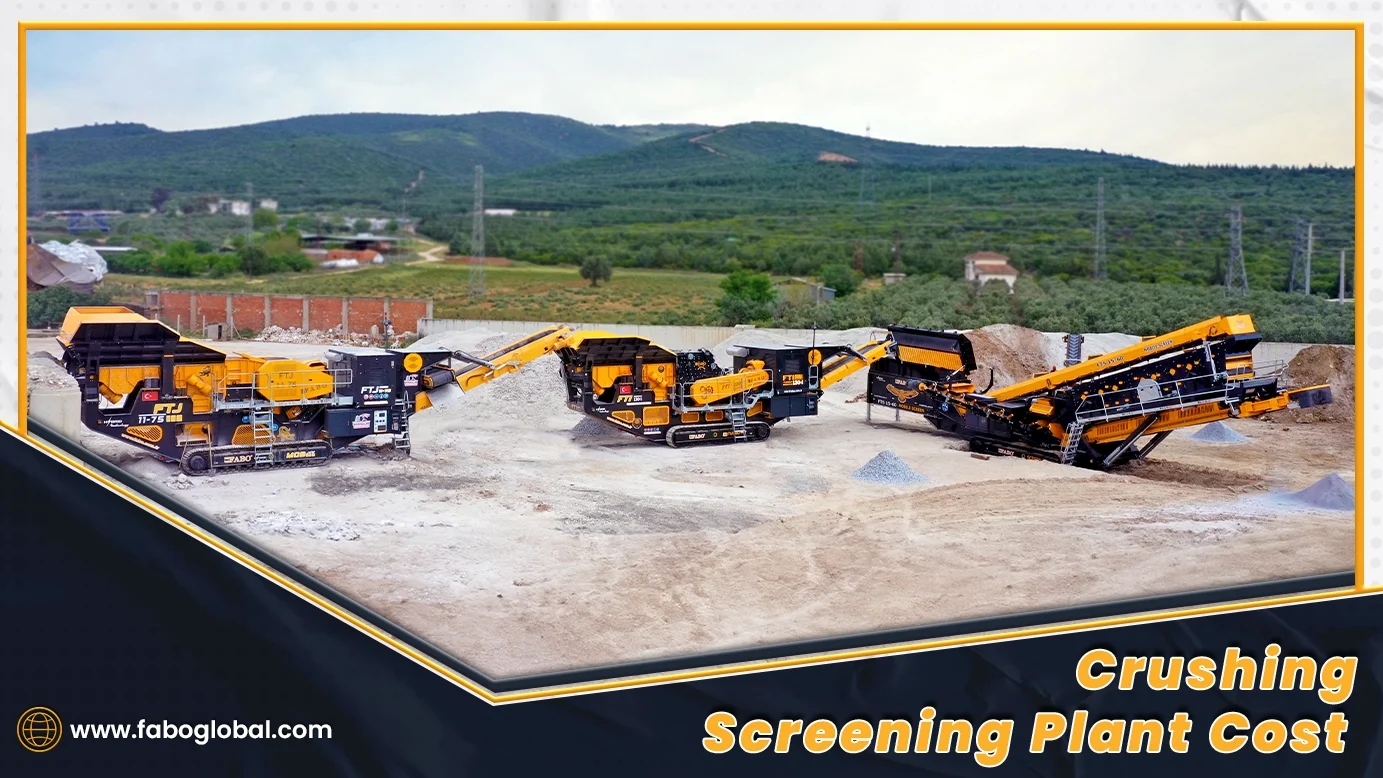
When planning a new aggregate, mining, recycling, or concrete production project, one of the first questions decision-makers ask is about Crushing Screening Plant Cost in 2026. However, in today’s industry, cost is no longer just about purchasing equipment. It’s about long-term efficiency, operational reliability, and how well a plant supports production goals over time.
As technology advances and project expectations grow, crushing and screening plants are becoming more sophisticated. Buyers are now focused on total system value rather than short-term expenses. In this article, FABO Global explains what shapes crushing and screening plant investment in 2026, what factors truly matter, and how smart design choices can significantly improve long-term performance.
What Is the Average Crushing Screening Plant Cost in 2026?
The average Crushing Screening Plant Cost in 2026 cannot be defined by a single figure because every project has unique requirements. A crushing and screening plant is a complete production system made up of multiple machines working together in harmony. The final investment depends on how that system is designed and how efficiently it operates.
In 2026, most buyers evaluate cost from a broader perspective. Instead of focusing only on the initial setup, they consider production efficiency, durability, energy consumption, and maintenance needs. A well-designed plant may require higher engineering effort at the beginning, but it often delivers lower operating costs and higher productivity over time. For this reason, understanding the full scope of the system is essential when assessing overall plant investment.
Key Factors That Influence Crushing Screening Plant Cost in 2026
Several important factors directly influence Crushing Screening Plant Cost, and recognizing them helps avoid unexpected challenges later.
One major factor is plant configuration. A simple setup designed for basic material processing will differ greatly from a multi-stage plant built for high-capacity or specialized production. The number of crushers, screens, conveyors, and auxiliary equipment directly affects system complexity and operational efficiency.
Material type also plays a critical role. Hard and abrasive materials require reinforced machines and wear-resistant components, while softer materials allow for more flexible system designs. Choosing the right equipment for the material being processed has a strong impact on long-term performance.
Another key element is automation and control technology. Modern plants increasingly rely on automated systems to regulate material flow, monitor performance, and reduce downtime. While automation enhances productivity and safety, it also influences the overall system design and investment structure.
Cost Breakdown: Equipment and Operation
To clearly understand Crushing Screening Plant Cost, it is helpful to break it down into three main stages: equipment, installation, and operation.
Equipment investment includes crushers, screens, feeders, conveyors, and control systems. The quality of engineering, structural strength, and component compatibility directly affect plant reliability and service life.
Operational cost becomes the most significant factor over time. Energy efficiency, wear part replacement, labor requirements, and production continuity all determine how cost-effective a plant remains throughout its lifecycle.
When these stages are evaluated together, businesses gain a realistic view of total system value rather than isolated expenses.
How FABO Global Optimizes Crushing Screening Plant Cost in 2026
FABO Global focuses on optimizing Crushing Screening Plant Cost through engineering expertise and project-specific solutions rather than standard configurations.
Each plant is designed based on material properties, production capacity, and operational conditions. By offering customized and turnkey systems, FABO Global eliminates unnecessary complexity and ensures that every component contributes to overall efficiency.
Modular structures simplify installation, while high-quality materials and energy-efficient designs improve durability and reduce long-term operational effort. Advanced automation systems further enhance production control and plant safety.
With extensive global project experience and a strong focus on innovation, FABO Global delivers crushing and screening solutions that balance performance, reliability, and sustainable investment value in 2026.
Mobile vs Stationary Crushing Screening Plant Cost in 2026
Choosing between mobile and stationary systems is one of the most common considerations when evaluating Crushing Screening Plant Cost in 2026.
Mobile crushing and screening plants are designed for flexibility. They are ideal for projects that require frequent relocation or operate on short timelines. Their compact design and integrated systems reduce setup time and simplify logistics, making them attractive for dynamic operations.
Stationary crushing screening plants, in contrast, are built for long-term, high-volume production. They offer greater customization, higher capacity potential, and stable performance over extended periods. These systems are often preferred for permanent production facilities where consistent output is essential.
The right choice depends on project duration, production targets, and operational strategy. Understanding how each system supports these goals helps ensure an efficient and balanced investment.
How Production Capacity Affects Cost
Production capacity has a direct impact on Crushing Screening Plant Cost. Higher capacity systems require larger crushers, wider screening surfaces, stronger structural components, and more powerful drive systems.
As capacity increases, system design becomes more complex. Material flow must be carefully balanced between crushing and screening stages to maintain efficiency and prevent bottlenecks. This requires precise engineering and proper equipment selection.
At the same time, overestimating capacity can lead to unnecessary investment and underutilized resources. The most effective plants are designed around realistic production needs, with flexibility for future expansion if required.
In 2026, modular designs make it easier to scale production without major structural changes, helping businesses protect their initial investment.
Maintenance Costs of Crushing Screening Plants in 2026
Maintenance plays a crucial role in long-term crushing and screening system expenses. In 2026, buyers place increasing importance on plants that are easy to maintain and designed for long service life.
Wear parts such as crusher liners, screen meshes, and conveyor components naturally require replacement. Systems designed with easy access points and standardized components significantly reduce maintenance time and operational interruptions.
Advanced monitoring and automation systems also support maintenance efficiency. By tracking operating conditions in real time, these systems help operators identify potential issues early and plan maintenance more effectively.
A well-maintained plant operates more reliably, reduces downtime, and delivers consistent production over time.